
GFI APAC’s 2025 Report Card + 6 Things to Watch in 2026
A mere 12 months ago, our experts published a look ahead at 2025 and outlined five reasons to be hopeful about APAC’s alternative protein sector, based on changes we expected to see over the course of the year.
So how’d we do? Let’s check the list.

Not only did Beijing open its first innovation facility focused entirely on alt proteins in 2025, but at the all-important ‘Two Sessions’ conference in March, government leaders explicitly outlined their intent to build “a diversified food supply system,” with substantial resources dedicated to “research on novel food resource development technology.” The Ministry of Agriculture and Rural Affairs also shared plans to “develop new food resources such as plant-based meat.”
Additional action plans were launched by major industrial parks and economic zones across the country, including in Guangdong Province—China’s most populous region—which is constructing an innovation hub dedicated to pioneering technological breakthroughs in microbial proteins, plant-based proteins, and cultivated meat.
Oh, and China also established itself as the undisputed champion of cultivated meat patents, domestic regulators issued their first-ever approval of mycoprotein, local startup Joes Future Food completed construction of the world’s first large-scale, in-house cultivated pork production facility, and multinational food company Angel Yeast opened a factory capable of cranking out 11,000 tonnes of fermentation-derived protein annually.
I’d say that earns a check. ✅

In June, Australia issued its first approval of a cultivated meat product, as expected. Encouragingly, national regulators also simultaneously developed some category-wide requirements and guidance for producers—a step towards bringing cultivated meat more in line with the standardised requirements of conventional food categories.
Then, in December, Malaysia became the first Muslim-majority country in the world to determine that cultivated meat can be halal—a ruling that will have far-reaching implications and signals an emerging global consensus on the permissibility of cultivated meat.
That’s two historic ‘firsts’ right there! ✅
One minor caveat: South Korea did not issue a cultivated meat approval last year, as we thought they might. We still expect this to happen in the near future, but in the meantime, GFI is working to streamline safety review assessments and explore cost-efficient alternatives to animal toxicological studies that can reduce unnecessary barriers to market entry.
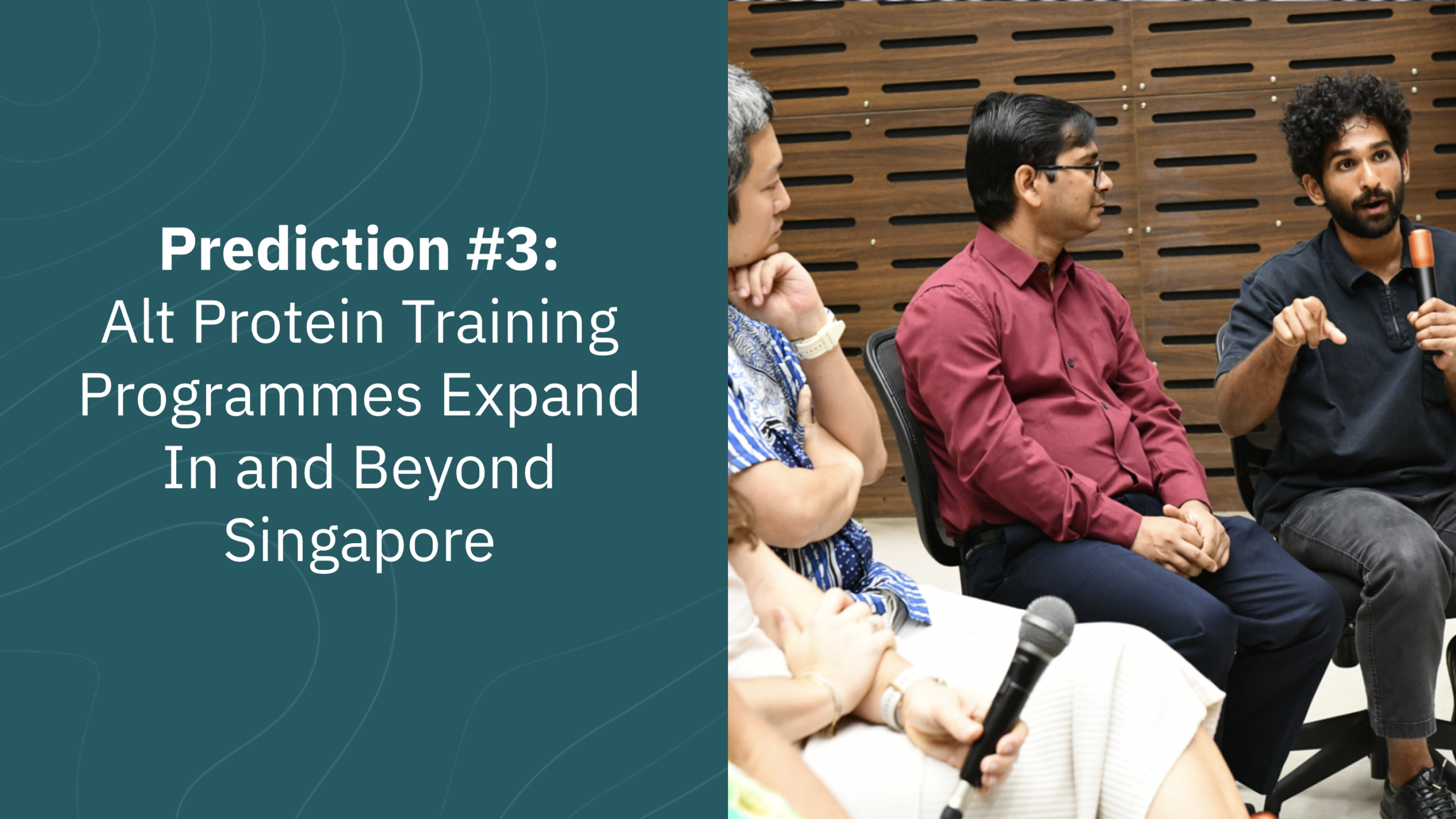
The University of Sydney launched a new short course called “Alternative Protein Product Development – Fundamentals,” to teach students how to leverage chemistry and innovative food technologies to deliver delicious and sustainable proteins at scale.
And in the Philippines, the Paro Institute launched a new hybrid course focused on sustainable food systems, with an emphasis on alternative proteins.
Meanwhile, back in the Lion City, our experts spoke to more than 100 Singapore Polytechnic students about career pathways in the alternative protein sector, and co-organised the 2025 Cellular Agriculture Talent Development Programme, where seven mentees were paired with industry mentors for a three-month research project. The programme concluded with a poster competition and panel discussion, with funding support from Singapore’s Agency for Science, Technology, and Research (A*STAR).
We also brought students from 15 universities across APAC to Singapore for our inaugural Alt Protein Project Regional Student Symposium, which one student described as “the best decision [they] made” all year. ✅
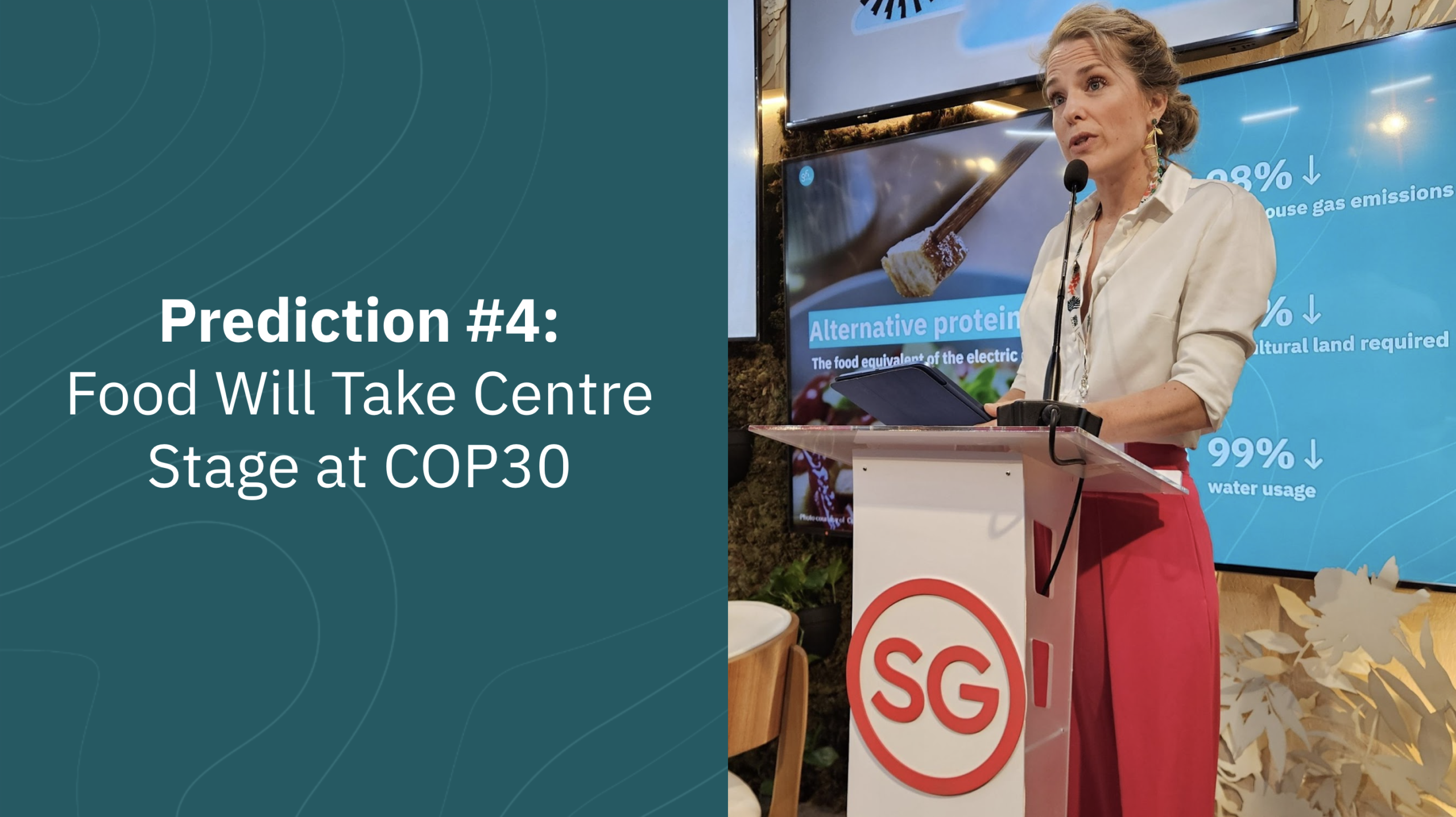
Throughout this year’s United Nations climate summit in Brazil, food was identified as a climate solution worthy of greater focus by key stakeholders, including Chinese food policy leader Prof. Shenggen Fan, Singapore’s Sustainability Minister Grace Fu and National Climate Change Secretariat Director Mr. Joel Tee, as well as global philanthropic leaders like Andy Jarvis from the Bezos Earth Fund. Many of these conversations took place at the Singapore Pavilion, where GFI APAC helped to shape the ‘Food Day’ agenda.
As Mr. Jarvis succinctly noted, “There’s no Paris goal without food system transformation, and I don’t think there is any chance of food system transformation without looking at protein. This is mission-critical for planet Earth.”
However, in areas beyond the pavilions where GFI experts were driving the conversation, food remained woefully underrepresented. So there was progress, but the subject has not yet hit “centre stage” to the degree it needs to.
Partial credit. ☑️

On this one, we outperformed even our most optimistic expectations—literally.
To objectively measure whether or not the latest crop of products that combine conventional and plant-based meat were close to reaching taste parity with fully conventional meat, GFI APAC partnered with NECTAR and commissioned A*STAR’s Singapore Institute of Food and Biotechnology Innovation to conduct an independent, large-scale blind taste test—a rigorous tool for assessing sensory performance. To our surprise, not only did several meats enhanced with plant proteins closely match their conventional counterparts on taste, but one even outperformed the original!
These groundbreaking findings were revealed at an exclusive workshop dedicated to enhancing conventional meat with high-quality plant proteins, which drew more than 60 representatives from major ingredient manufacturers, alternative protein startups, global meat producers, scientific research institutions, and government agencies. ✅
✅✅✅☑️✅ 4.5/5. Not too shabby!
Now, let’s turn our eyes to 2026 …
Here are six things to watch for this year, in no specific order:

Until now, South Korea has been a relatively quiet player in the ‘future foods’ space. As noted, the country has not yet cleared cultivated meat for commercial sale, but it is home to some of Asia’s top startups, and several provinces have been laying the groundwork to scale up domestic R&D and manufacturing capacity. We expect 2026 to be the year Korea’s efforts start to show real results.
Not convinced? At the tail end of 2025, none other than the President of Korea himself, Mr. Lee Jae-myung, provided congratulatory remarks to the World FoodTech Forum in Seoul that highlighted the importance of food technology in the age of climate change, food security, and demographic changes. At the same event, the Speaker of the National Assembly Woo Won-shik also touted alternative food production as an important domestic technology.
Additionally, South Korea recently enacted the Food Tech Industry Promotion Act, which aims to integrate the food industry with cutting-edge technologies. This initiative is designed to stimulate job creation and bolster the national economy, and the Enforcement Rule of the Act includes all three pillars of alternative protein technologies—plant-based, fermentation-derived, and cultivated—thanks to input from GFI.
Under this Act, the Ministry of Agriculture, Food and Rural Affairs (MAFRA) is empowered to provide direct support to eligible food tech businesses, offer startup assistance, promote technology development, facilitate access to research facilities and equipment, and foster international cooperation and market entry. The Act also incentivises the growth of food tech innovation clusters by enabling MAFRA to establish and operate support facilities, conduct joint research and development, and validate new technologies. Furthermore, it allows food tech operators, universities, and research institutes to seek regulatory improvements crucial for industry advancement.
Add up all of this high-level government support and you have the ideal conditions for building a protein innovation powerhouse.

2026 has barely begun, but new regional novel-food plans are already coming out of China fast and furious, and all indicators suggest that biomanufacturing—producing food or ingredients through controlled biological processes, as compared to traditional agriculture—will be a major theme of this year’s all-important “Two Sessions” summit, when a new national five-year plan will be unveiled.
Most English-language media outlets are not yet watching this space, but the key takeaway? China is showing early signs that the same R&D-to-mass-production pipeline that made it a low-cost solar powerhouse could soon transform the planet’s largest importer of soy, corn, dairy, and meat into the dominant producer of “future foods.”

There once was a time when mainstream environmental champions wouldn’t touch the topic of food with a ten-foot pole. Meat’s climate impact was seen as the ultimate third rail, too uncomfortable to meaningfully address, despite its enormous—and expanding—ecological hoofprint.
But over the past year, with UN reports now tabulating that food and fossil fuel production are collectively causing $5 billion of environmental damage every hour, the conversation has finally begun to shift from “Should we?” to “OK, but how?”
Enter: Climate financing. With VC funding increasingly hard to come by, many climate leaders like Andy Jarvis from the Bezos Earth Fund are instead looking to governments, industry, and philanthropy to lead the way. “I’d love to see a real, meaningful coalition around sustainable protein emerge in the world,” he told audiences at COP30. A coalition “where the meat industry, alternative proteins, governments, and all of finance come together and realise that this isn’t something to see as a ‘problem area’; it’s something to see as a ‘massive solution’ area.”
As Minister Grace Fu noted in her fireside chat with GFI at COP30’s Singapore Pavilion, at the end of the day, it’s all going to come down to money. “We need innovation to address the needs of the food sector, in adaptation and resilience, and the potential is just out there waiting for finance to be activated.”
Minister Fu is almost uniquely well qualified to speak to this challenge. An accountant by training, she has leveraged her fiscal expertise to help turn the Lion City into a global hub for climate finance. In 2024, she announced that Singapore would commit up to US$500 million towards derisking decarbonisation energy projects across Asia by matching concessional capital from multilateral banks, philanthropic institutions, and other partners.
So far, Minister Fu has stopped short of saying that Singapore is ready to step forward with a similarly ambitious plan for food. But she has already done the sector a great service by creating a successful template upon which food-focused climate funding plans can be built. As Fu herself put it in a speech to ASEAN last year, “We need to maintain the momentum of climate action in spite of the global headwinds … Sustainable agribusiness and forestry practices are good for business and the environment.” After all, she added, “climate change waits for no one.”

Historically, enthusiasm for plant-based and cultivated meat has been primarily driven by the sector’s sizeable advantages for food security, sustainability, and public health. But in 2026, our experts believe you’ll also see policymakers and industry leaders pointing to new opportunities for ‘future food’ production to boost domestic GDP and create a wide range of new jobs.
Data from Australia’s national science agency has shown that the local alternative protein sector is projected to generate thousands of high-tech jobs and reach $3 billion in value by 2030, with ambitious scenarios running closer to $9 billion.
A similar report by Singapore-based firm Asia Research & Engagement shows that if Thailand transitioned 50 percent of its protein production to plant-based proteins, the vaunted “Kitchen of the World” could generate an additional $37.7 billion in economic value by 2050, while reducing domestic reliance on imported raw materials. In total, this transition is projected to create a net gain of more than a million new jobs.
Be on the lookout for additional independent studies to be published this year, including some commissioned by GFI, as governments across Asia start to weigh the real risks of missing out on the next big economic boom.

Following successful proof-of-concept trials in 2025—including success stories at major European grocery chains like Albert Heijn—our Corporate Engagement experts expect to see Asia’s first large-scale rollouts of conventional meat products enhanced with high-quality plant proteins.
These large-scale market tests will almost certainly hit the foodservice space first, and products that blend conventional and plant-based meat will be offered at price parity with their fully conventional counterparts. Companies will likely follow Albert Heijn’s example by citing their net-zero goals as a motivator for expanding more deeply into this category, given the significant emissions reductions of blended products. For consumers, we expect personal health advantages (high protein, lower saturated fat, more fibre) and a pleasantly surprising taste performance that matches or exceeds conventional meat to be the primary motivators.
If local consumers gravitate towards these new products, expect to see an even greater focus on industry innovation within the category. Plant-based protein producers will see a lucrative new revenue stream to latch onto, and major meatpackers will see the value in further improving enhanced-meat product performance—especially on texturisation and underresearched food formats like whole-cut chicken breast and pork belly, which are staples in many traditional recipes.

And finally, over the coming year, we expect the traditional framing of alternative proteins as a tool for health-focused meat reduction to increasingly take a backseat to a maximalist approach that emphasises how plant-based meat products can match or even exceed the protein content of conventional meat. This theme will be particularly pronounced in countries where popular weight-loss drugs are shrinking portion sizes, meaning the foods consumers do eat need to be especially nutrient-dense.
That’s good news for ingredients like soy protein concentrates, which are a highly digestible and bioavailable protein source, and for mycoprotein, which offers higher essential amino acid content than chicken or beef. New research by Chinese scientists also shows that cultivated meat can have higher digestibility, leading to a higher abundance of bioactive peptides and free amino acids compared to its conventional counterpart. All of this suggests that far from being a hindrance to future alt-protein sector growth, the global shift towards ‘protein maxxing’ could turn out to be a blessing in disguise.
Onwards,

Ryan Huling
Senior Writer | GFI APAC
Haven’t subscribed yet? Join our mailing list below to be the first to hear about updates like this!